

OWON XDS3000 Series
The scope that becomes your whole bench: 60 to 300 MHz, 2 or 4 channels, an 8, 12 or 14-bit ADC and a 40M record — with an arbitrary waveform generator, a multimeter, Wi-Fi and a battery available as built-in modules. From €388.
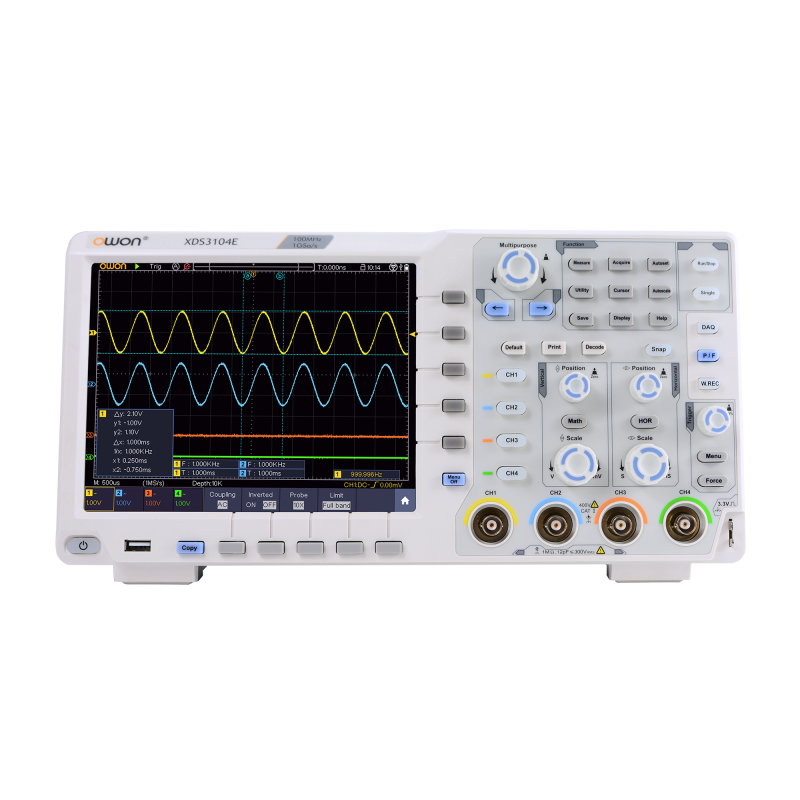
One instrument, as many tools as you need
The XDS3000 is OWON’s “n-in-1” benchtop family. Every model shares the same ultra-thin 340 × 177 × 90 mm chassis, an 8-inch 800 × 600 display and a 40M record length — then lets you decide how much instrument you need inside it. Bandwidth runs from 60 MHz to 300 MHz, sampling to 2.5 GSa/s, and the “A” models carry a switchable 8 / 12 / 14-bit ADC that resolves up to 64× finer vertical detail than an ordinary 8-bit scope.
What makes it n-in-1 is the module bay: the same box can hold a 25 MHz arbitrary waveform generator, a 3¾-digit multimeter with data logging, a Wi-Fi module for phone and tablet control, a capacitive multi-touch screen, VGA output and a 13,200 mAh battery for floating measurements. Serial triggering and on-screen decoding for RS232, I²C, SPI and CAN are available as factory-fitted decode kits, and SCPI plus LabVIEW are standard for automated work.
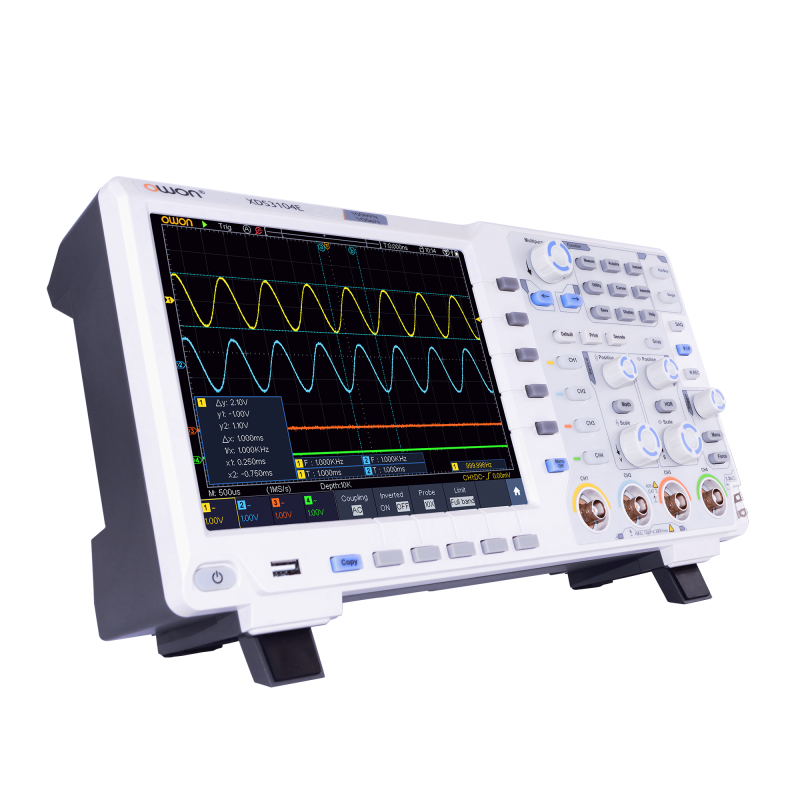
Why the XDS3000
Four things set this range apart from an ordinary 8-bit bench scope in the same price bracket.
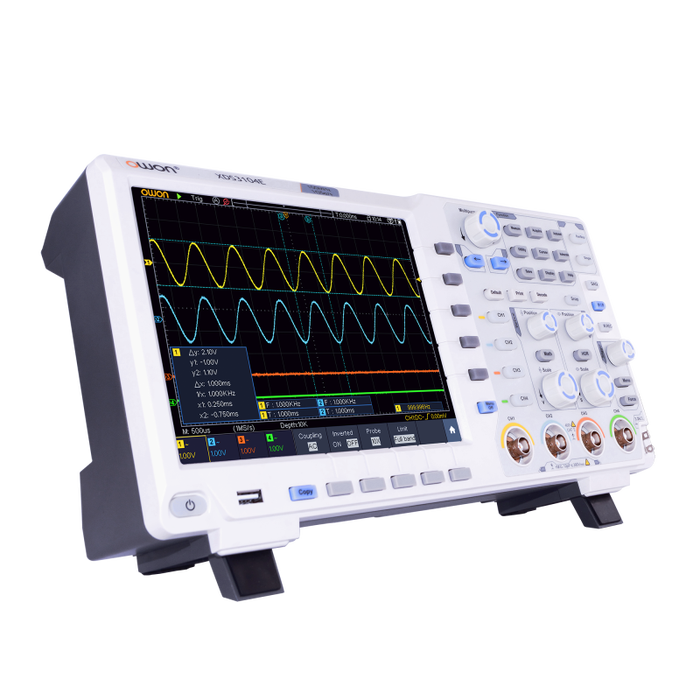
Up to 14-bit resolution
The “A” models switch between 8, 12 and 14-bit modes — 256, 4096 or 16,384 vertical levels. On the XDS3202A that means 200 MHz at 8-bit, 150 MHz at 12-bit and 20 MHz at 14-bit, so you trade bandwidth for vertical detail exactly when ripple, noise or a small signal on a big offset demands it.
ADC resolution is how many levels the input range is divided into: 8-bit gives 256, 12-bit 4096, 14-bit 16384.
More bits resolve small signals riding on large ones. At 8 bits a 5 mV ripple on a 5 V rail falls below one code step and is invisible. Higher resolution usually costs bandwidth, so the modes are switchable rather than always-on.
In practice: Measuring switching ripple on a DC rail: flat at 8 bits, clearly shaped at 12 or 14 bits.
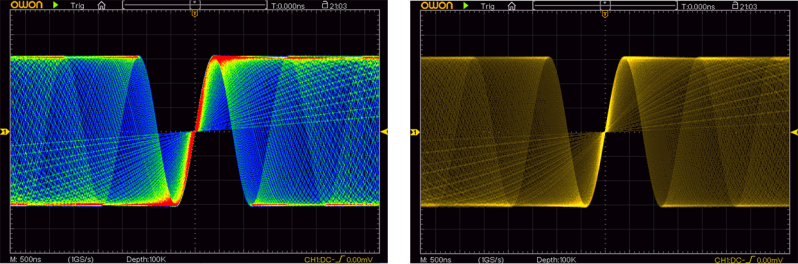
Fast, colour-graded display
Up to 75,000 waveforms per second, with multi-level grayscale and colour-temperature display on the 200 and 300 MHz models: how often a point is hit is painted into the trace, so a rare glitch stands out instead of hiding in the persistence.
A large multi-touch display with pinch-zoom and drag, that also accepts a mouse and keyboard.
Spectrum work is reading detail in a trace. A bigger, higher-resolution screen means markers, limit lines and the trace itself stay legible at the same time, and dragging a span is faster than stepping a value with a knob.
In practice: Zooming into a 200 kHz slice of a 3 GHz span by pinching, rather than typing a new centre frequency and span.
n-in-1: generator, DMM, Wi-Fi, battery
Order the chassis with a 25 MHz 1- or 2-channel arbitrary waveform generator, a 4000-count multimeter, a Wi-Fi module, a touchscreen, a VGA port and a 13,200 mAh battery. One box replaces a scope, a generator, a meter and a logger on a crowded bench.
Internal lithium-ion power and a rugged case, so the instrument works away from a bench and a mains socket.
The measurement often has to happen where the problem is — up a mast, in a plant room, in a vehicle. An instrument that has to be carried to the fault and run for a few hours changes what can be diagnosed on the day.
In practice: Tracing interference across a site on foot, taking readings at each location without hunting for power.
Decode, log and automate
Trigger and decode RS232, I²C, SPI and CAN with the factory-fitted decode kits; log to USB; print over PictBridge; drive the scope from a PC over LAN or USB with SCPI and LabVIEW. A frequency counter and a full maths set including FFT, integration, differentiation and four digital filters come as standard.
LAN, USB and the SCPI command set let the instrument be driven from a PC, and its screen and data pulled off it, without anyone standing at the front panel.
Anything you do twice you will do a hundred times. SCPI over LXI, USBTMC or a raw socket means a test sequence runs unattended and logs to file, and LabVIEW or IVI drivers drop it into a rig you already have.
In practice: A production check that sweeps five bands, compares each against a limit line and writes pass/fail to CSV — the operator presses one key instead of setting the analyser up five times per unit.
Who it’s for & best applications
The XDS3000 suits the bench that has to do everything: design, service, teaching and field work — with the option to skip buying a second and third instrument.
- Electronics design and debugging that needs more than 8 bits of vertical detail
- Service and repair benches with limited space
- Education and training rooms (VGA output, 4-channel models)
- Embedded and automotive work with RS232, I²C, SPI and CAN buses
- Field and floating measurements with the battery module
- Power-supply ripple and noise in 12 or 14-bit mode
- Switching-converter and motor-drive timing across 4 channels
- Serial-bus debugging with on-screen decode
- Stimulus-response testing with the built-in generator
- Long captures on the 40M record for intermittent faults
- Automated production test over SCPI / LabVIEW
Choose your model
The family splits in two: dual-channel models (2 channels + external trigger) that go all the way to 300 MHz and 2.5 GSa/s, and four-channel models that top out at 200 MHz but give you four simultaneous inputs. Within each line, an A in the model number means the switchable 8 / 12 / 14-bit ADC, and an E means the economical 8-bit version. Click any model for its full specifications.
Dual-channel models — 60 to 300 MHz
Two independent channels plus an external trigger input, and the only models in the family that reach 300 MHz and 2.5 GSa/s.
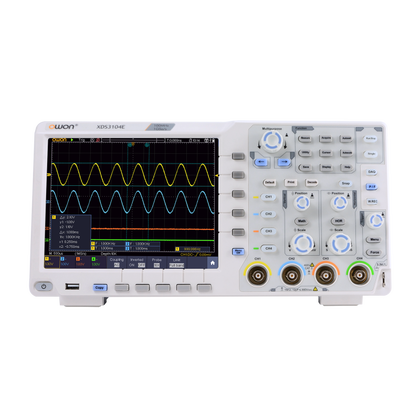
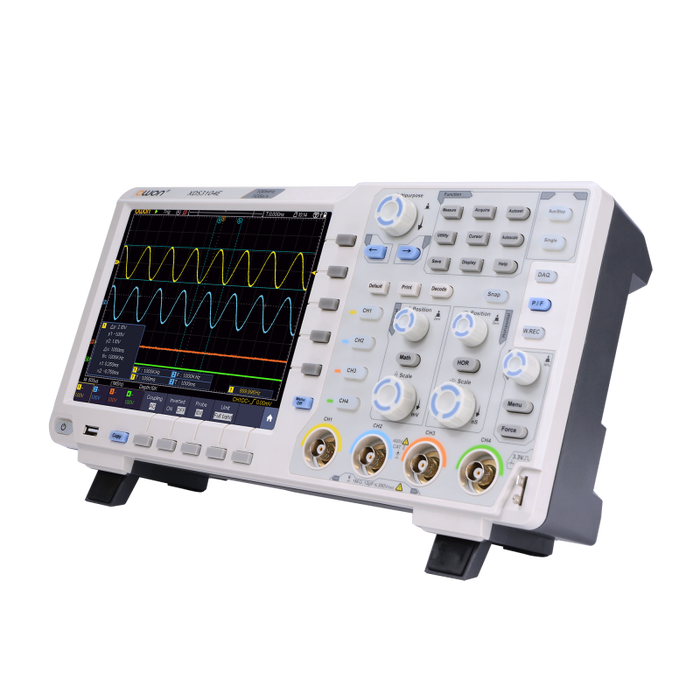
XDS3062A
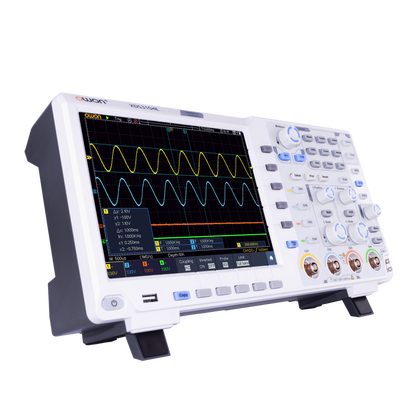
XDS3102
XDS3102A
XDS3202E
XDS3202
XDS3202A
XDS3302
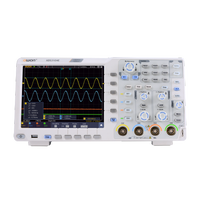 XDS3062A60 MHz8 / 12-bit1 GSa/s75,000 wfms/s
€391 on request
XDS3062A60 MHz8 / 12-bit1 GSa/s75,000 wfms/s
€391 on request 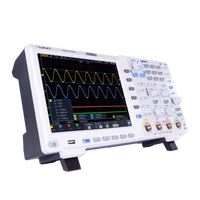 XDS3102100 MHz8-bit1 GSa/s56,000 wfms/s
€398 on request
XDS3102A100 MHz8 / 12-bit1 GSa/s56,000 wfms/s
€421
XDS3202E200 MHz8-bit1 GSa/s56,000 wfms/s
€391 on request
XDS3202200 MHz8-bit2 GSa/s68,000 wfms/s
€716 on request
XDS3202A200 MHz8 / 12 / 14-bit1 GSa/s75,000 wfms/s
€995 on request
XDS3302300 MHz8-bit2.5 GSa/s68,000 wfms/s
€1128 on request
XDS3102100 MHz8-bit1 GSa/s56,000 wfms/s
€398 on request
XDS3102A100 MHz8 / 12-bit1 GSa/s56,000 wfms/s
€421
XDS3202E200 MHz8-bit1 GSa/s56,000 wfms/s
€391 on request
XDS3202200 MHz8-bit2 GSa/s68,000 wfms/s
€716 on request
XDS3202A200 MHz8 / 12 / 14-bit1 GSa/s75,000 wfms/s
€995 on request
XDS3302300 MHz8-bit2.5 GSa/s68,000 wfms/s
€1128 on request
Four-channel models — 60 to 200 MHz
Four simultaneous inputs in the same chassis. The five -E and -AE models have their own detail page: see the XDS3000-E series
XDS3064E
XDS3104E
XDS3064AE
XDS3104AE
XDS3104
XDS3104A
XDS3204E
XDS3204AE
XDS3064E60 MHz8-bit1 GSa/s (1 ch)45,000 wfms/s
€388
XDS3104E100 MHz8-bit1 GSa/s (1 ch)45,000 wfms/s
€517 sold out
XDS3064AE60 MHz8 / 12 / 14-bit1 GSa/s (8-bit, 1 ch)45,000 wfms/s
€614 sold out
XDS3104AE100 MHz8 / 12 / 14-bit1 GSa/s (8-bit, 1 ch)45,000 wfms/s
€703
XDS3104100 MHz8-bit1 GSa/s (1 & 2 ch)70,000 wfms/s
€703 on request
XDS3104A100 MHz8 / 12 / 14-bit1 GSa/s (8-bit)70,000 wfms/s
€929 on request
XDS3204E200 MHz8-bit1 GSa/s (1 & 2 ch)70,000 wfms/s
€849 on request
XDS3204AE200 MHz8 / 12 / 14-bit1 GSa/s (8-bit)70,000 wfms/s
€1082
Every model: 8-inch 800 × 600 display, 40M record length, 1 mV/div – 10 V/div, USB host + device, LAN, Trig Out, frequency counter, SCPI & LabVIEW. Prices include VAT. Models marked on request are current OWON products that we order in — ask us for a firm quote and lead time; the price shown is indicative.
Make it n-in-1: the modules
These are factory-fitted options, ordered with the instrument rather than added later — tell us which ones you want and we quote the exact build. The battery is also sold separately.
25 MHz arbitrary waveform generator
A built-in 1- or 2-channel arbitrary/function generator: 14-bit, 125 MSa/s, 2 mVpp – 6 Vpp, 8K waveform length, sine, square, ramp and pulse plus user-defined arbitrary shapes.
3¾-digit multimeter
A 4000-count digital multimeter inside the scope: DC to 1000 V, AC to 750 V, current to 10 A, resistance to 40 MΩ, capacitance, diode and continuity — with data logging.
Wi-Fi module
Connect the scope to a phone or tablet over Wi-Fi for remote control and live display of the measurement results through the OWON app.
Capacitive multi-touch screen
Replaces the standard 8-inch LCD with a multi-point capacitive touchscreen — pinch to zoom the timebase, drag cursors and swipe through menus.
VGA + AV port
Mirrors the display to a monitor, projector or classroom screen — the usual choice for education and demonstration benches.
Serial decode kits
RS232, I²C and SPI decoding as one kit, CAN decoding as a second: trigger on and decode bus traffic directly on the waveform.
Li-ion battery pack
3.7 V / 13,200 mAh rechargeable pack for floating and field measurements — roughly 2.5 to 3.5 hours of use per charge depending on model.
Soft carry bag
Padded bag sized for the 340 × 177 × 90 mm chassis, its probes and the power cord.
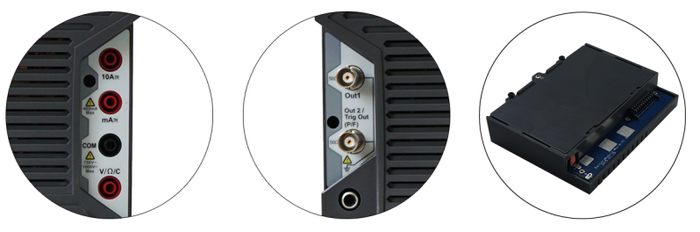
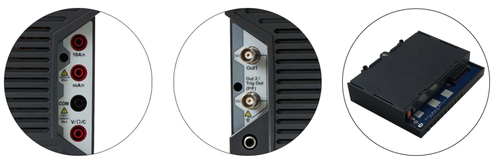
Generator outputs on the rear panel
The AWG module adds one or two BNC outputs. On the XDS3202, XDS3202A and XDS3302 only the 2-channel generator is available.
ViewMultimeter jacks and leads
The DMM module adds a full 4000-count meter with its own input jacks, test leads and a capacitance extension module.
View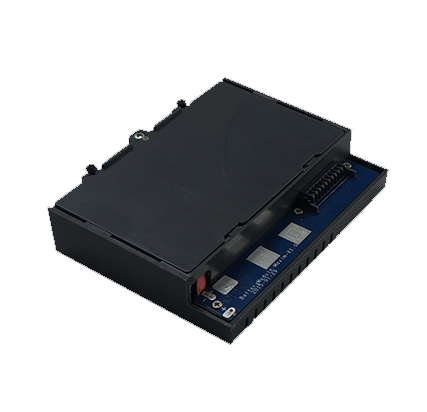
Li-ion battery pack — €59
3.7 V / 13,200 mAh. Roughly 3.5 hours on the 60/100 MHz models and 2.5 hours on the 200/300 MHz models.
ViewSpecifications
Shared across the XDS3000 family; bandwidth, resolution, sample rate and capture rate depend on the model — see the comparison tables above.
| Oscilloscope | |
| Bandwidth | 60 / 100 / 200 / 300 MHz |
| Channels | 2 + 1 external trigger, or 4 |
| Vertical resolution | 8-bit · switchable 8 / 12 / 14-bit on the “A” models |
| Max real-time sample rate | 2.5 GSa/s (XDS3302, single channel) |
| Record length | 40M (dual-channel models) · 40M / 20M / 10M for 1 / 2 / 4 channels |
| Waveform capture rate | up to 75,000 wfms/s |
| Horizontal scale | 1 ns/div – 1000 s/div (2 ns/div on the 60 & 100 MHz models) |
| Vertical sensitivity | 1 mV/div – 10 V/div |
| Input impedance | 1 MΩ ±2% ‖ 15 pF ±5 pF; 50 Ω ±2% on XDS3202, XDS3202A and XDS3302 |
| Max input voltage | 1 MΩ: ≤ 300 Vrms · 50 Ω: ≤ 5 Vrms |
| Timebase accuracy | ±1 ppm (dual-channel) · ±2.5 ppm (four-channel) |
| DC gain accuracy | ±3% at 1 mV/div, ±2% at ≥ 2 mV/div (±1.5% at ≥ 5 mV/div on XDS3202A) |
| Probe attenuation | 0.001× – 1000×, 1-2-5 steps |
| Analysis, interfaces & general | |
| Trigger types | Edge, Video, Pulse, Slope, Runt, Windows, Timeout, Nth Edge and Logic as standard; I²C, SPI, RS232 and CAN with the decode kits |
| Serial decoding | RS232, I²C, SPI, CAN — optional decode kits |
| Measurements | 30+ automatic measurements, auto cursors, frequency counter |
| Maths | +, −, ×, ÷, FFT, FFTrms, Intg, Diff, Sqrt, user-defined function, digital filters (LP / HP / BP / BR) |
| Waveform storage | 100 waveforms |
| Display | 8-inch colour LCD, 800 × 600, 65,536 colours (optional capacitive multi-touch; optional 1024 × 768 IPS on some builds) |
| Interfaces | USB host, USB device, PictBridge, Trig Out (Pass/Fail), LAN — VGA + AV optional |
| Remote control | SCPI and LabVIEW |
| Generator (option) | 25 MHz, 125 MSa/s, 14-bit, 2 mVpp – 6 Vpp, 8K memory, 1 or 2 channels |
| Multimeter (option) | 3¾-digit / 4000 count, 1000 V DC, 750 V AC, 10 A, 40 MΩ, 100 µF, diode & continuity |
| Battery (option) | 3.7 V, 13,200 mAh — ≈ 3.5 h (60/100 MHz) or 2.5 h (200/300 MHz) |
| Power | 100 – 240 VAC, 50/60 Hz, CAT II, < 24 W; 2 A T-class 250 V fuse |
| Environment | 0 – 40 °C operating, ≤ 90% RH, fan cooled |
| Dimensions & weight | 340 × 177 × 90 mm · ≈ 2.6 kg |
From the official OWON XDS3000 dual-channel and four-channel specification sheets (v1.6.4); subject to change, errors & omissions excepted.
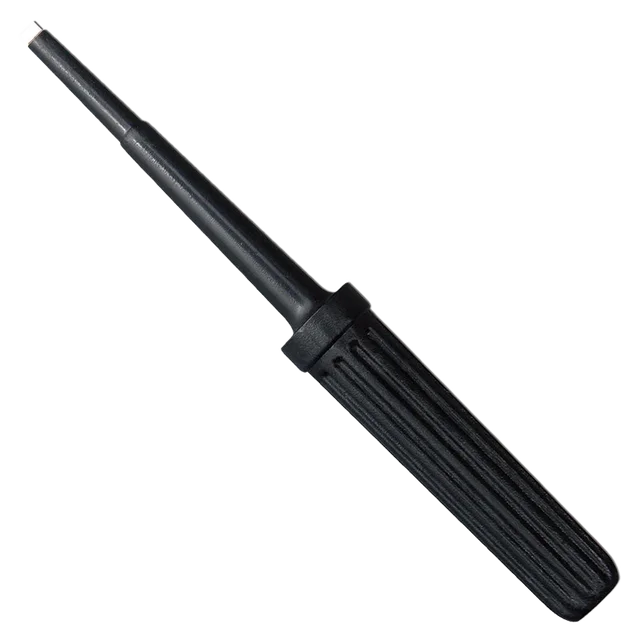
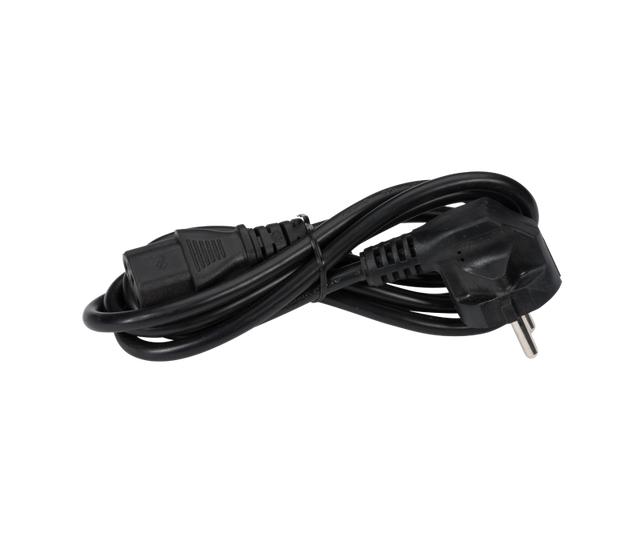
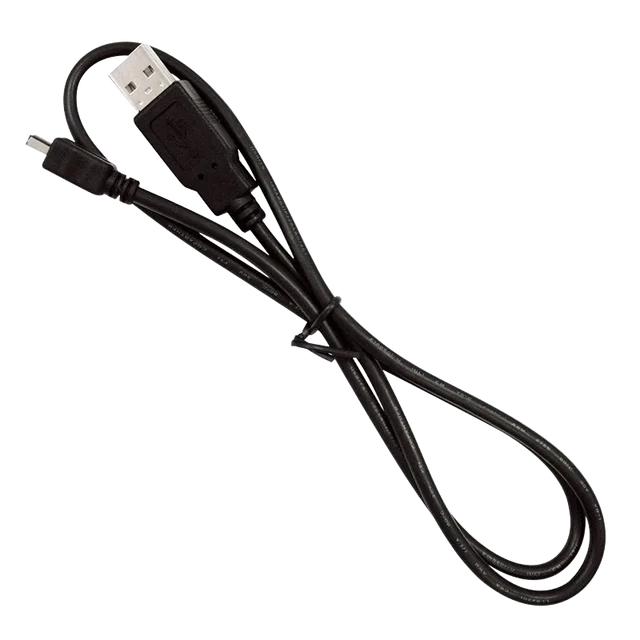
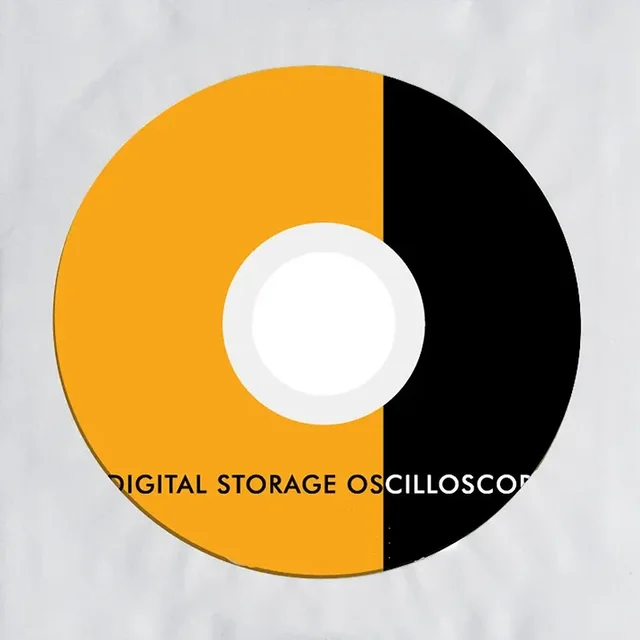
In the box
Supplied as standard with every XDS3000, plus the accessories that come with the optional modules.
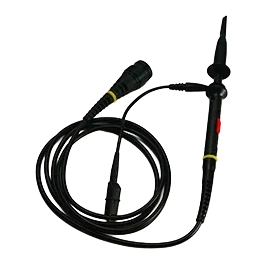
optional
optional
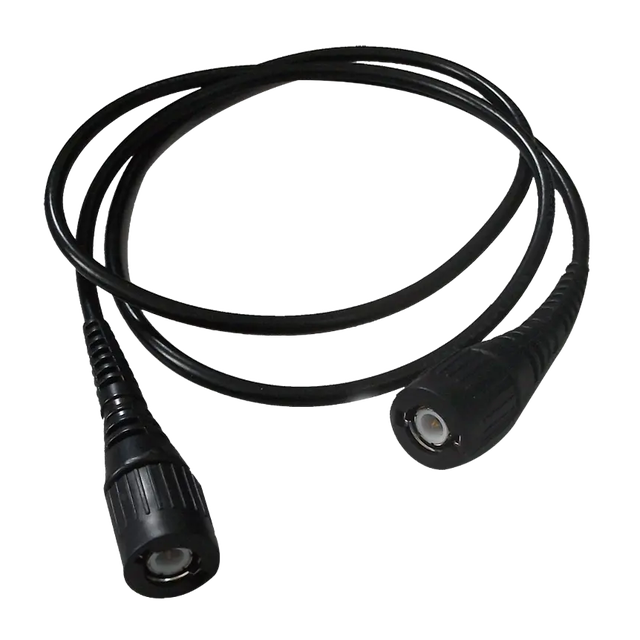
optional
optional
Dashed items ship with the matching option: the leads and capacitance module with the multimeter, the Q9 cable with the waveform generator. Box contents subject to final delivery.
Related series & accessories
Other OWON benchtop ranges, and the parts that go with your XDS3000.
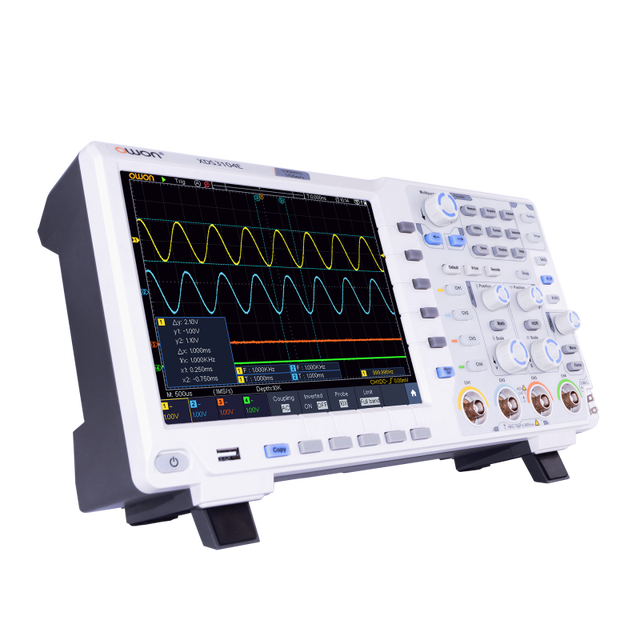
XDS3000-E — 4 channels
The five four-channel E and AE models in stock now: 60–200 MHz, 8 or 8/12/14-bit, from €388.
View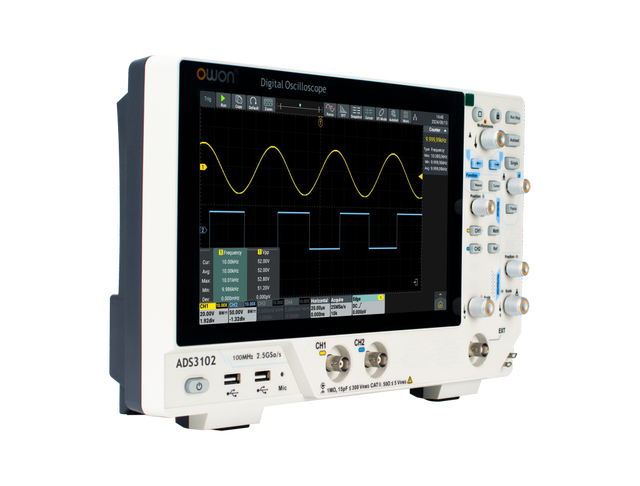
Step up: ADS3000 series
100–500 MHz, 2.5 GSa/s, 500M record and a 10.1-inch Android touchscreen, from €485.
View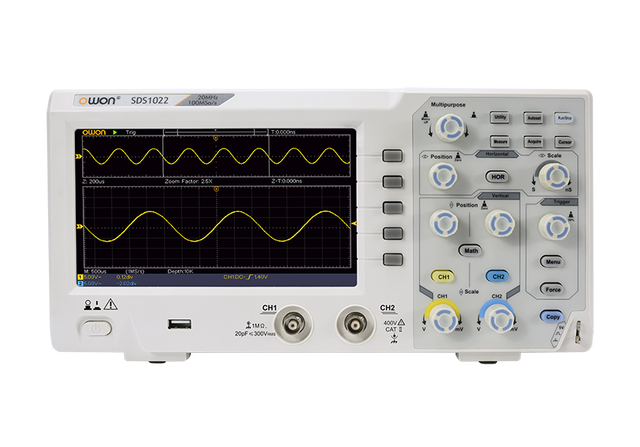
Budget: SDS1000 series
OWON’s most affordable bench scopes: 20–200 MHz, 2 or 4 channels, from €190.
ViewProbes & accessories
Spare passive probes, current probes, high-voltage probes and cables for every OWON oscilloscope.
ViewNot sure which XDS3000 is right for you?
Tell us the bandwidth you need, whether 12 or 14-bit resolution matters, how many channels and which modules you want built in — we will configure the model and quote it, including the options that are not listed online.
Downloads
Official OWON documentation and Windows software. The dual-channel and four-channel lines have separate manuals.
Also available: the four-channel quick guide, the four-channel SCPI protocol, the OSC3000 application, and the factory pages for the dual-channel and four-channel series.