

OWON SmartDS Series
Eight two-channel bench scopes from 60 to 300 MHz, sampling up to 3.2 GS/s into a 10M-point record, on an 8-inch 800 × 600 display — with an SVGA output for a monitor or projector and an optional battery for floating and portable measurements. From €345.

Deep memory in a thin, light bench scope
The SmartDS is OWON’s long-running two-channel bench range, and its defining feature is memory: a 10M-point record on each channel, in an instrument that weighs 1.82 kg and stands only 70 mm deep. Eight models cover 60 to 300 MHz with single-channel sample rates from 500 MS/s to 3.2 GS/s. A 10M record means you can hold a long window of signal and still zoom into a single edge without re-triggering.
Two things set it apart from a plain economy scope. Every model has an SVGA video output — the “V” in the model number, standard on the SDS8302 and SDS9302 — so the screen goes straight to a monitor or a projector for a production line, a meeting or a classroom. And a 7.4 V / 8000 mAh battery is a factory option on all eight, which both makes the instrument portable and lets it float, so you can probe a circuit that is not referenced to mains earth.

Why the SmartDS
Four things that are unusual at this price.

10M record length
Ten million points per channel, selectable from 1K up to 10M in the acquisition menu. On the SDS6062V, SDS7072V, SDS7102V and SDS7202V the full 10M is available at any sample rate. On the faster SDS8102V and above the 10M record applies below the top sample rate — at maximum rate the record is 10K — so choose the depth or the speed you need for the measurement.
Record length is how many samples the instrument stores per acquisition. Together with the sample rate it sets how long a window you can capture without dropping resolution.
Sample rate and time window trade against each other for a fixed memory. Deep memory is what lets you hold a long sequence at full rate instead of choosing between seeing the whole frame and seeing the edges inside it.
In practice: Capturing a full 20 ms mains cycle while still resolving a 100 ns switching spike inside it needs deep memory; a shallow buffer forces you to pick one or the other.

SVGA output as standard
An 800 × 600 SVGA port on the back mirrors the screen to an external monitor or a projector. It is what makes this range a fixture in production-line monitoring, design reviews and teaching labs, where everyone in the room needs to see the same trace. Standard on the SDS8302 and SDS9302; the “V” suffix marks it on the others.
Click to enlarge
Record and replay 1000 frames
Two-channel waveform record captures up to 1000 frames and plays them back, so an intermittent event can be caught once and then studied frame by frame. Pass/Fail waveforms are recorded too, which turns the scope into a simple go/no-go logger on a test bench.
Click to enlarge
Optional battery, floating measurement
A 2s2p 7.4 V / 8000 mAh pack is a factory option on every model. It makes the instrument genuinely portable, and because the chassis is then off mains earth it supports floating measurements — probing a point that is not at ground potential without an isolation transformer.
Internal lithium-ion power and a rugged case, so the instrument works away from a bench and a mains socket.
The measurement often has to happen where the problem is — up a mast, in a plant room, in a vehicle. An instrument that has to be carried to the fault and run for a few hours changes what can be diagnosed on the day.
In practice: Tracing interference across a site on foot, taking readings at each location without hunting for power.
Who it’s for & best applications
A dependable two-channel bench scope for work where memory depth, a shared screen or portability matter more than a touch interface.
- Teaching labs and training rooms — the SVGA output drives a projector directly
- Production-line and QA benches that need Pass/Fail plus a shared display
- Service and repair work where 10M of memory finds an intermittent fault
- Field and installation work, with the optional battery
- Floating measurements on circuits that are not referenced to mains earth
- Long captures searched for a rare glitch across a 10M record
- Auto-scale for quick checks on an unknown signal
- Video and broadcast triggering on NTSC, PAL and SECAM
- FFT spectrum checks and 20+ automatic measurements
- Pass/Fail masking with recorded waveforms as evidence
- Remote control and logging over LAN with
Choose your model
All eight are two-channel, share the same 8-inch 800 × 600 screen, the same 1.82 kg chassis and the same SVGA output. What changes is bandwidth and sample rate. The 6000 and 7000 models hold the full 10M record at any sample rate; the 8000 and 9000 models trade record depth for speed at the very top of their range. Read the number as bandwidth: SDS7102V is 100 MHz, SDS8202V is 200 MHz, SDS9302 is 300 MHz at 3.2 GS/s.

SDS6062V
SDS7072V
SDS7102V
SDS7202V
SDS8102V
SDS8202V
SDS8302
SDS9302
 SDS6062V60 MHz500 MS/s250 MS/s10M
€345 on request
SDS7072V70 MHz1 GS/s500 MS/s10M
€358 on request
SDS7102V100 MHz1 GS/s500 MS/s10M
€372 on request
SDS7202V200 MHz1 GS/s500 MS/s10M
€451 on request
SDS8102V100 MHz2 GS/s1 GS/s10M / 10K
€610 on request
SDS8202V200 MHz2 GS/s1 GS/s10M / 10K
€716 on request
SDS8302300 MHz2.5 GS/s1.25 GS/s10M / 10K
€1128 on request
SDS9302300 MHz3.2 GS/s1.6 GS/s10M / 10K
€1327 on request
SDS6062V60 MHz500 MS/s250 MS/s10M
€345 on request
SDS7072V70 MHz1 GS/s500 MS/s10M
€358 on request
SDS7102V100 MHz1 GS/s500 MS/s10M
€372 on request
SDS7202V200 MHz1 GS/s500 MS/s10M
€451 on request
SDS8102V100 MHz2 GS/s1 GS/s10M / 10K
€610 on request
SDS8202V200 MHz2 GS/s1 GS/s10M / 10K
€716 on request
SDS8302300 MHz2.5 GS/s1.25 GS/s10M / 10K
€1128 on request
SDS9302300 MHz3.2 GS/s1.6 GS/s10M / 10K
€1327 on request
Sample rate is shared between the two channels: the single-channel figure applies with one channel on. Prices include VAT and are indicative — these are current OWON products that we order in, so ask us for a firm quote and lead time.
Specifications
Shared across the SmartDS series; bandwidth, sample rate, rise time, scanning speed and record length depend on the model.
| Acquisition | |
| Bandwidth | 60 MHz · 70 MHz · 100 MHz · 200 MHz · 300 MHz, depending on model |
| Channels | 2 + 1 (external trigger) |
| Vertical resolution | 8-bit |
| Sample rate, single channel | 500 MS/s – 3.2 GS/s, depending on model |
| Sample rate, both channels | 250 MS/s – 1.6 GS/s, depending on model |
| Max record length | 10M per channel; on the SDS8102V and above 10M applies below the top sample rate and the record is 10K at maximum rate |
| Rise time (typical) | ≤ 5.8 ns at 60 MHz down to ≤ 1.17 ns at 300 MHz |
| Scanning speed | 5, 2 or 1 ns/div – 100 s/div (1-2-5 steps), depending on model |
| Acquisition modes | Normal, Peak detect, Averaging |
| Sampling rate range | 0.5 S/s to the model’s maximum |
| Interpolation | (sin x)/x |
| Input | |
| Input coupling | DC, AC, Ground |
| Input impedance | 1 MΩ ±2%, in parallel with 15 pF ±5 pF (10 pF ±5 pF on the SDS6062V) |
| Max input voltage | 400 V (DC + AC peak) |
| Vertical sensitivity | 2 mV/div – 10 V/div |
| Probe attenuation | 1X, 10X, 100X, 1000X |
| Bandwidth limit | 20 MHz / full bandwidth (not on the SDS6062V) |
| Channel isolation | 50 Hz: 100:1 · 10 MHz: 40:1 |
| Channel-to-channel delay | 150 ps (typical) |
| DC gain accuracy | ±3% |
| Trigger & analysis | |
| Trigger types | Edge, Video, Slope, Pulse, Alternate |
| Trigger modes | Auto, Normal, Single |
| Video standards | NTSC, PAL and SECAM line/field triggering |
| Automatic measurements | Vpp, Vmax, Vmin, Vtop, Vbase, Vamp, Vavg, Vrms, overshoot, preshoot, frequency, period, rise time, fall time, delay A→B, +width, −width, +duty, −duty, cycle RMS, cursor RMS, duty cycle and phase |
| Cursors | ΔV and ΔT between cursors |
| Waveform maths | +, −, ×, ÷, FFT |
| Waveform storage | 15 waveforms |
| Waveform record / replay | 2-channel record and replay, 1000 frames; Pass/Fail waveforms can be recorded |
| Auto-scale | Sets trigger mode, vertical scale and timebase from the applied signal |
| Display, interfaces & general | |
| Display | 8-inch colour LCD, 800 × 600 pixels, 65,536 colours |
| Interfaces | USB 2.0 host (flash-disk storage) and device, LAN, Pass/Fail output, SVGA video output; RS-232 optional |
| Remote control | SCPI over LAN, with a LabVIEW development case and free Windows PC software |
| Power supply | 100 – 240 VAC, 50/60 Hz, CAT II, < 18 W (SDS6062V) or < 24 W |
| Fuse | 2 A, T grade, 250 V |
| Battery (option) | Cell 4000 mAh / 3.7 V; pack 2s2p, 7.4 V / 8000 mAh |
| Environment | Operating 0 – 40 °C, storage −20 – 60 °C, ≤ 90% RH, natural convection cooling |
| Dimensions & weight | 340 × 155 × 70 mm (L × H × W) · ≈ 1.82 kg |
| Calibration interval | One year recommended |
From the official OWON SDS series user manual, section 9; subject to change, errors and omissions excepted.
In the box
Standard accessories; the dashed items are factory options.
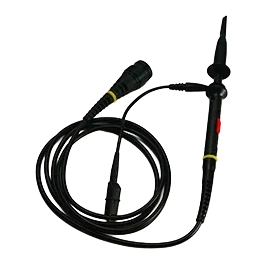
1.2 m, 1:1 / 10:1
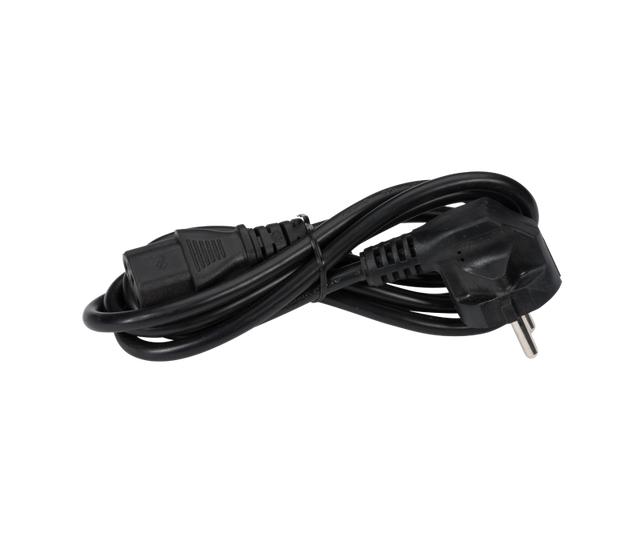
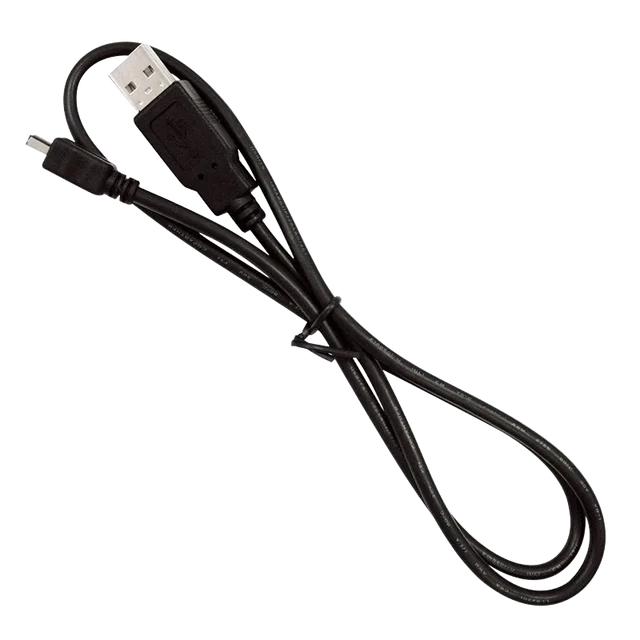

optional

Related series & accessories
Other OWON benchtop ranges, and the parts that go with your SmartDS.
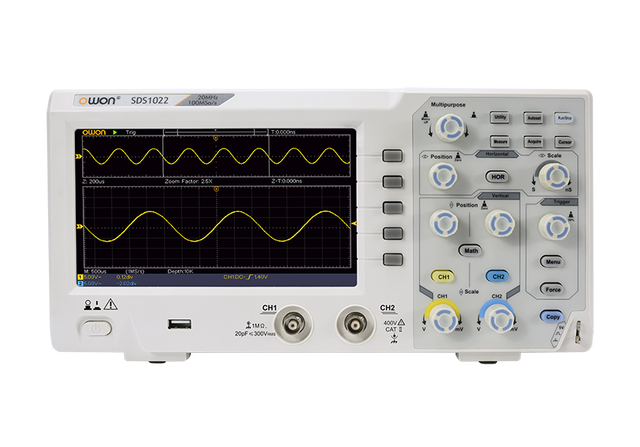
SDS1000 — economical
The entry-level bench range: 2 or 4 channels, 1 GSa/s, a smaller record and a lower price.
View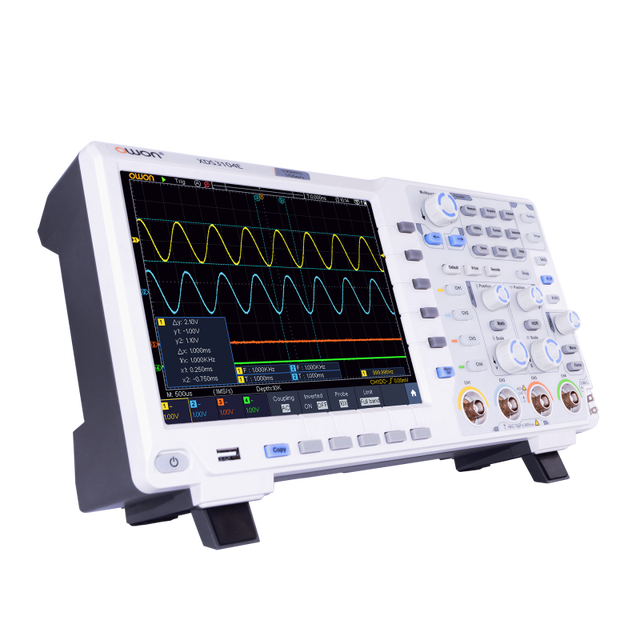
XDS3000 — n-in-1
60–300 MHz with switchable 8/12/14-bit resolution and built-in generator, multimeter, Wi-Fi and battery options.
View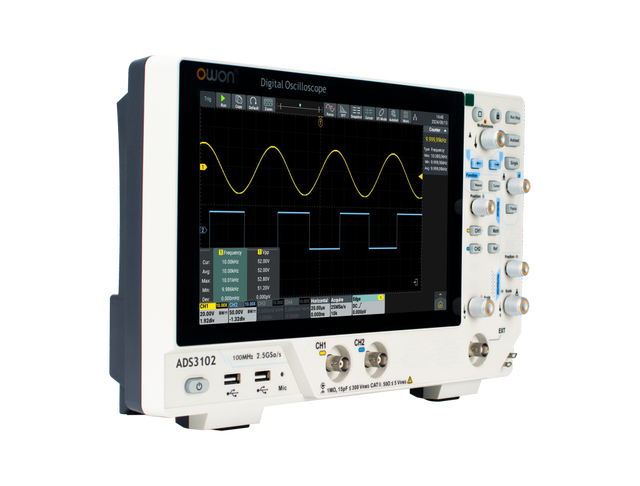
ADS3000 — multifunction
If you want a touchscreen and a built-in generator: 100–500 MHz multifunction benchtops.
ViewProbes & accessories
Passive probes, current probes, high-voltage differential probes and cables.
ViewConfigure your SmartDS
Tell us the bandwidth you need and whether you want the battery pack and the soft carry bag — we will quote the exact build with a lead time.
Downloads
Official OWON documentation and Windows software for the SmartDS series.
Also: OWON Oscilloscope PC software for Windows (ZIP) and the factory SDS product page.